Cat Love Multilayer Welcome Decor
A Designer’s First Look: Warm, Whimsical, and Purpose-Built
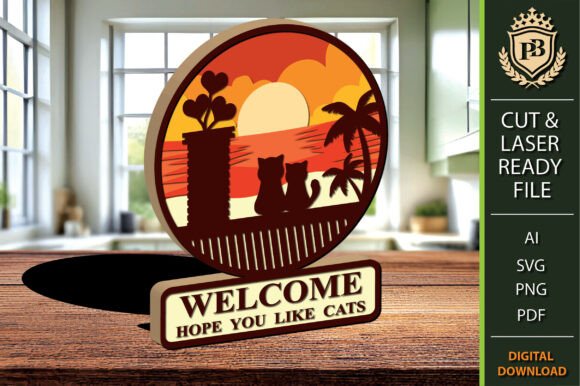
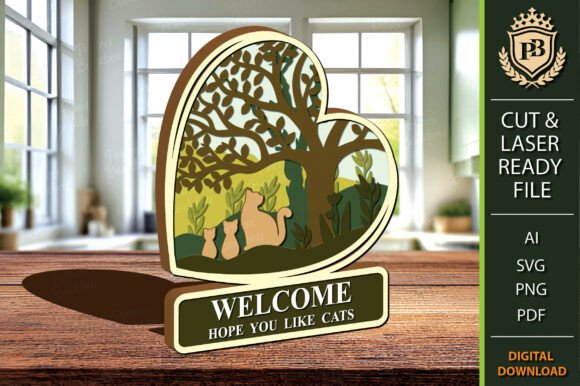
When I opened Cat Love Multilayer Welcome Decor for the first time, my instinct wasn’t to check file formats—it was to imagine it stitched on a linen tea towel hanging in a sunlit kitchen. The design carries an immediate sense of warmth and gentle personality: layered silhouettes of cats framing a soft “Welcome” script, with intentional negative space and balanced weight distribution. It doesn’t shout—it invites. As a designer who regularly selects embroidery files for client projects and small-batch production, I appreciate how this isn’t just decorative; it’s *curated*. The multilayer structure suggests thoughtful stitch sequencing—not random layering—and hints at subtle dimensionality without overloading density.
Real-World Use: From Tote Bag to Nursery Pillow
Last week, I prepped a custom order for a local boutique: embroidered cotton tote bags for their spring launch. I tested Cat Love Multilayer Welcome Decor on a medium-weight natural canvas tote—medium stabilizer, 40-weight rayon thread, standard 5” x 7” hoop. The result? Clean satin-stitched cat outlines held crisp definition, while the “Welcome” lettering used a mix of fill and running stitch that stayed legible even at 3.5” tall. Customers loved the tactile charm—not too cutesy, not too minimal. It also translated beautifully onto a cotton-blend baby pillow cover (with tear-away stabilizer), where the soft scale and rounded forms felt reassuringly gentle.
I’ve also used it as a focal point on a reversible apron—stitched once on each side, front and back—where the design’s symmetry and balanced proportions kept the garment looking intentional, not cluttered. For Etsy sellers or craft fair vendors, this is exactly the kind of machine embroidery design that elevates a handmade product from “nice” to “thoughtfully made.” It reads as both personal and polished—a rare balance.
Where It Shines (and Where to Pause)
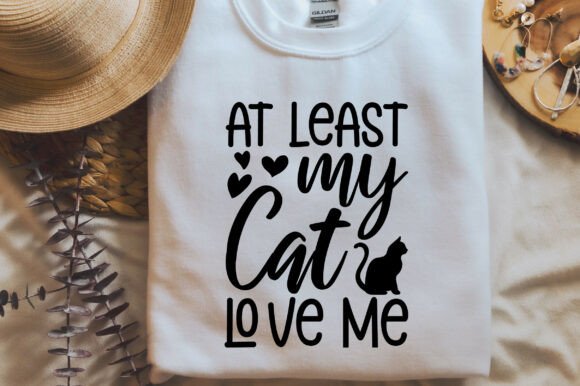
Cat Love Multilayer Welcome Decor excels in home decor contexts: tea towels, pillow covers, wall hangings, and nursery accents. Its moderate detail level makes it ideal for sweatshirt embroidery—especially on midweight fleece—where dense fill areas won’t pucker or overwhelm the fabric. On light-to-medium cotton, it stitches cleanly with minimal thread breaks or tension hiccups.
That said, I’d avoid using it on highly textured fabrics like bouclé or thick terry cloth without thorough testing. The fine inner lines in the cat ears and script curves can blur or disappear if the fabric swallows stitch definition. Similarly, on stretchy knits (think baby onesies or performance tees), you’ll need cutaway stabilizer and possibly reduced stitch density—check the embroidery file settings before committing. And while it works well on dark fabric, verify contrast: some lighter thread colors may recede unless paired intentionally with matte or tonal threads.
It’s not optimized for tiny hoops (<4” diameter) or curved surfaces like caps—those delicate cat whiskers and thin connecting lines risk distortion. If you’re planning an embroidered patch, consider simplifying or redigitizing those fine elements for better durability in washing and wear.
Design Integrity Meets Commercial Reality
As someone who advises small shop owners and digital product sellers, I pay close attention to how a design affects perceived value—and Cat Love Multilayer Welcome Decor delivers quietly. It doesn’t rely on flash; it builds trust through consistency and clarity. When customers see clean satin stitch edges, even fill coverage, and proportional spacing between layers, they subconsciously register professionalism—even if they don’t know embroidery terms.
This matters for your brand: whether you’re listing on Etsy, selling at a farmers’ market, or fulfilling wholesale orders, consistent execution strengthens buyer engagement. A well-stitched Cat Love Multilayer Welcome Decor on a kitchen towel tells your customer, “I care about details”—and that impression carries over to pricing, repeat purchases, and word-of-mouth referrals.
Practical Notes Every Embroiderer Should Run Through
- Always test first: Stitch on scrap fabric matching your final project’s weight and weave—especially if using textured, dark, or stretchy material.
- Check thread color contrast: Run a black-and-white mockup to assess legibility on light vs. dark backgrounds before choosing thread palette.
- Review stitch density: Dense fill areas near the cats’ bodies may benefit from slight underlay adjustment on heavy fabrics.
- Confirm hoop size compatibility: This isn’t a 3”-hoop design—verify your machine’s max dimensions match the file’s layout.
- Inspect small details: Zoom into the whiskers and inner ear lines in your embroidery software. Are they above 0.8mm width? If not, they may vanish on coarse fabric.
- Stabilizer strategy matters: Medium cutaway for knits, tear-away for stable wovens, and lightweight fusible for delicate linens.
- Licensing check: Since this is marketed for craft enthusiasts and professionals alike, confirm whether commercial use—including finished product sales and digital resale—is permitted before listing on Etsy or bundling with other design assets.
Final Thought: Not Just Another Welcome Design
In a sea of generic welcome motifs, Cat Love Multilayer Welcome Decor stands out by honoring both craft and context. It’s not trying to be everything—it’s designed for moments where warmth meets intention: a new parent’s nursery, a coffee shop’s branded apron, a handmade gift that says “I made this *for you*.” As a working designer, I reach for it when I need authenticity without compromise—when the finished product must feel personal, durable, and quietly memorable. That’s not easy to achieve. But here, it’s done.