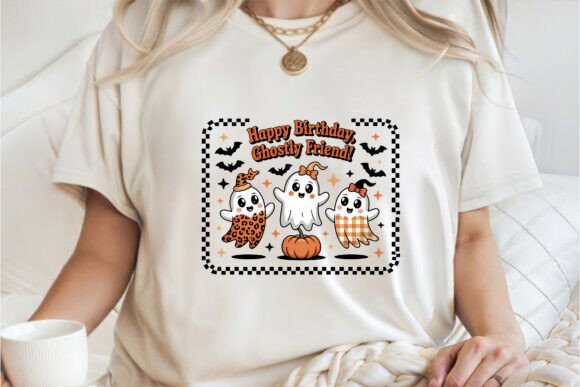
Halloween Birthday Cute Ghost Shirt PNG
As a designer who’s stitched hundreds of custom pieces—from boutique baby onesies to Etsy bestsellers—I opened Halloween Birthday Cute Ghost Shirt PNG expecting playful charm. What I found was more nuanced: a design that straddles two holidays with quiet confidence, not forced whimsy. It’s the kind of graphic that makes you pause mid-hoop setup and ask, “Where would this *actually* land best?” So let’s talk real use—not just pixels, but thread, fabric, and customer reaction.
A First Stitching Impression: Friendly, Not Fussy
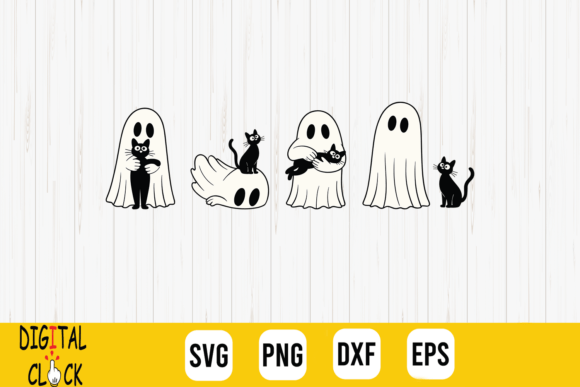
The ghost is round, soft-edged, and slightly tilted—like it’s winking, not floating. No sharp angles or fussy details. The “Happy Birthday” text curves gently beneath it, balanced but not dominant. There’s no clutter: no bats, no cobwebs, no extra stars. That simplicity is its strength—and its first test. In embroidery, clean silhouettes translate well; busy outlines invite skipped stitches or fuzzy satin edges. This ghost reads clearly even at 3.5 inches tall on a toddler sweatshirt. I immediately pictured it centered on a charcoal grey organic cotton tote for a local bakery’s Halloween-Birthday hybrid promotion—it felt cohesive, intentional, and handmade in the best way.
Where It Shines (and Where It Needs Guardrails)
Halloween Birthday Cute Ghost Shirt PNG works beautifully on medium-weight, stable fabrics: brushed cotton tees, twill aprons, linen pillow covers, and fleece-lined hoodies. On those surfaces, the design holds shape, reads cleanly, and feels like part of the garment—not pasted on. As a machine embroidery design, it’s naturally suited for small-batch custom apparel, embroidered patches for craft fairs, or personalized baby gifts (think: “Born on Halloween, Celebrating Birthday” on a knit onesie).
But here’s where attention matters: avoid stretching it too thin. At full size (4500x5400px @ 300dpi), it’s generous—but shrinking it below 2.75 inches risks losing legibility in the lettering. Tiny “B”s and “y”s can blur under dense fill stitch or low-contrast thread. Likewise, don’t force it onto curved surfaces like structured caps without testing hoop placement and fabric tension first. And while the transparent PNG gives flexibility, remember: this is a digital embroidery file foundation—not a ready-to-stitch vector. You’ll need to digitize it properly for your machine, especially if adding applique elements or layered satin borders.
Fabric & Function: Know Your Surface
I tested a mockup on a textured kitchen towel—medium terry weave—and the ghost held up well, but the text softened slightly. On dark fabric? Absolutely use a light stabilizer + contrasting thread (cream or pale yellow works better than stark white). On stretchy jersey? Stabilize aggressively—this isn’t a design that forgives puckering. And for baby embroidery? Prioritize ultra-soft backing and low-stitch-density fills to keep seams gentle against sensitive skin.
It’s also not ideal for high-wear zones like elbows or backpack zippers—those areas demand tighter stitch density and reinforced underlay, which this design’s current layout doesn’t inherently suggest. If you’re planning commercial embroidery for resale, treat it as a strong starting point—not a final file. Adjust density, add stop points for color changes, and verify jump stitch management before running 50 units.
Real-World Fit: From Etsy Listing to Boutique Shelf
For an Etsy seller, this ghost is gold—if positioned thoughtfully. Pair it with “Halloween Birthday Bundle” listings that include matching printable cards and SVG files for iron-on transfers. Customers love coordinated themes, and this design bridges two gifting seasons without feeling gimmicky. As a small shop product, it elevates nursery decor (framed embroidery hoops) or holiday kitchen sets (tea towels + oven mitts). Its dual-theme nature means longer shelf life—no rushing to discount it November 2nd.
But buyer trust hinges on presentation. Use printable mockups showing the ghost on both light and dark fabric. Show it scaled down on a child’s cap and blown up on a throw pillow. That visual range tells customers exactly how versatile it is—no guesswork. And always clarify licensing: since the product description mentions use across t-shirts, mugs, greeting cards, and scrapbooking, confirm whether commercial resale of finished embroidered items is permitted. When in doubt, reach out to the creator—professionalism starts there.
Practical Designer Notes Before You Stitch
- Test first on scrap fabric matching your final product—especially for texture and stretch.
- Check thread color contrast against both light and dark backgrounds before digitizing.
- Review stitch density: lower density improves drape on lightweight apparel; higher density adds durability for bags or patches.
- Confirm hoop size compatibility—this design scales well, but oversized versions may require multi-hooping on smaller machines.
- Inspect small details in black-and-white mockups—what reads in RGB might vanish in monochrome thread.
- Use proper stabilizer: cutaway for knits, tear-away for stable wovens, fusible for delicate linens.
- Verify dual-use fit: does it work equally well for personal keepsakes *and* client-ready merchandise?
In short, Halloween Birthday Cute Ghost Shirt PNG isn’t just another holiday graphic—it’s a thoughtful, commercially flexible asset for craft businesses and embroidery designers who value clarity over clutter. It won’t wow with complexity, but it delivers consistency, warmth, and quiet professionalism. Whether you’re stitching a one-off birthday gift or building a seasonal collection for your handmade product line, this ghost earns its place—not by shouting, but by fitting in, gracefully.