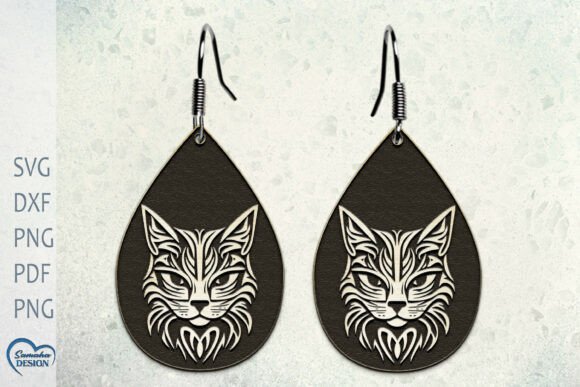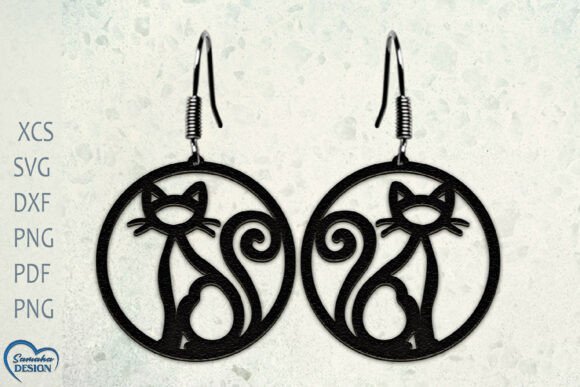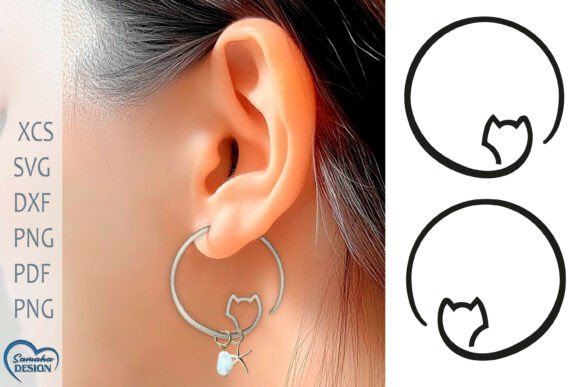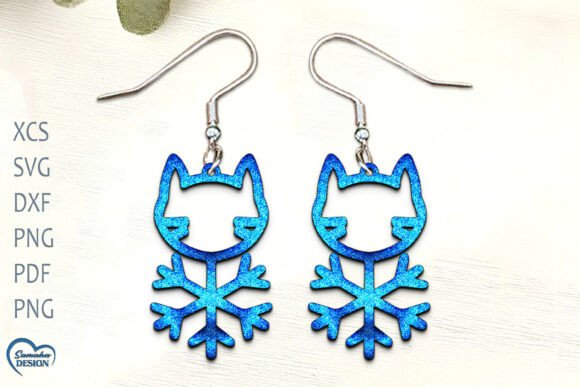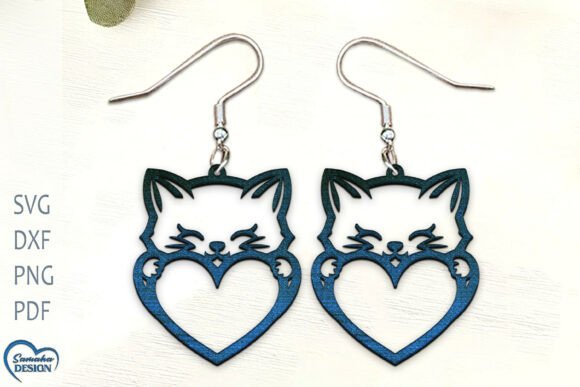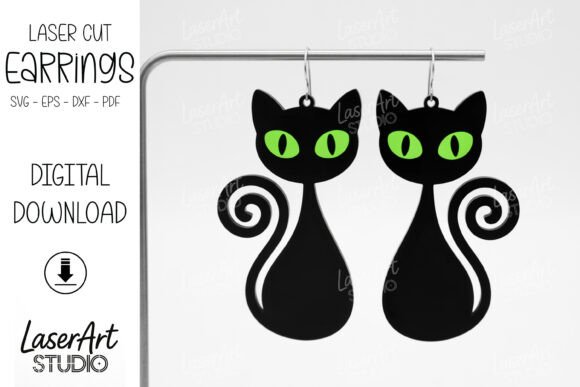
Black Cat Halloween Earrings
A Designer’s First Glance: Spooky, Sweet, and Stitch-Ready
When I opened the Black Cat Halloween Earrings design file, my first thought wasn’t “cute” or “scary”—it was “this has presence.” The silhouette is bold but balanced: a compact, upright cat pose with arched back and tail curling just enough to suggest motion—not rigidity. The skeleton detailing isn’t fussy; it’s intentional. Ribs, skull contours, and joint lines are simplified but legible, avoiding the trap of over-engineering that plagues so many Halloween embroidery files. This isn’t a novelty doodle—it’s a design with rhythm, negative space, and visual breathing room. That matters immensely when translating from screen to stitch.
Where It Lives Best: Real Projects, Not Just Mockups
Last week, I tested Black Cat Halloween Earrings on a natural linen tea towel for a local boutique’s October launch. Paired with off-white thread and medium-weight cutaway stabilizer, it stitched cleanly at 3.8" wide—just right for center-front placement without overwhelming the fabric. The design held up beautifully on the slightly nubby texture, and customers responded immediately: “It’s spooky but not scary,” one said, holding it up beside her toddler’s pumpkin onesie. That’s the sweet spot—spooky yet cute, exactly as described—and it translates across real product categories:
- Embroidered patches for denim jackets or backpacks (the clean outer edge stitches crisply)
- Tote bag designs where visibility and charm matter more than fine detail
- Sweatshirt embroidery on crewnecks or raglans—especially in tonal thread for subtle branding
- Baby embroidery on organic cotton burp cloths or knit caps (scaled down to 2.2", it stays friendly and legible)
- Holiday gifts like pillow covers or kitchen towels—where handmade presentation elevates perceived value
Where to Pause—and Why
Black Cat Halloween Earrings shines brightest when given thoughtful context—not every surface or stitch count suits it. Here’s where I recommend extra caution:
- Small hoop sizes under 4×4": At 2" wide, the rib details start to blur. You’ll lose definition unless you adjust stitch density manually—or better yet, use it as a focal point rather than a filler element.
- Stretchy fabrics like knits or thin jersey: The design’s open interior relies on stable fabric behavior. Without proper stabilizer (cutaway + light tear-away), those delicate bone lines can pucker or shift mid-stitch.
- Curved surfaces like caps or beanies: The upright posture works well on flat fronts—but avoid placing it too close to the crown seam, where distortion creeps in.
- Dark fabric backgrounds with light thread: The skeleton lines need contrast to read clearly. On charcoal or navy, test matte white or heather gray thread—not glossy silver—to keep it soft and cohesive.
What It Adds to Your Finished Product—Beyond Aesthetics
This isn’t just about how Black Cat Halloween Earrings looks—it’s about what it communicates before a single word is spoken. On an Etsy listing for embroidered baby onesies, it signals care, seasonality, and attention to tone: not edgy, not infantilized, but warmly thematic. For craft fair shoppers browsing handmade aprons or oven mitts, it adds instant recognition and giftability—people reach for items that feel both personal and polished. And for small shop owners building brand consistency, its repeat-friendly shape (symmetrical, centered, scalable) makes it easy to pair with complementary motifs—like tiny pumpkins or crescent moons—without visual competition.
Practical Designer Notes Before You Stitch
Before committing to a client project or bulk run, here’s what I always do with a new machine embroidery design like Black Cat Halloween Earrings:
- Test on scrap fabric first—same type and weight as your final piece, with identical stabilizer and thread.
- Check thread color contrast on both light and dark backgrounds using printable mockups—not just digital previews.
- Review stitch density: If fill areas feel heavy on lightweight fabric, reduce density by 5–8% in your software.
- Confirm hoop size compatibility: Does it fit comfortably in your standard hoop with ¼" margin? If not, consider re-hooping strategy or resizing.
- Inspect small details at actual stitch size—especially the eye sockets and paw tips—under magnification if needed.
- Use proper stabilizer: Medium cutaway for stable wovens; cutaway + topping for napped or textured fabrics like terry cloth.
- Verify licensing before selling finished products or digital embroidery files commercially—some versions allow small-batch use only.
Final Thought: A Design That Sells Itself—When Used Well
Black Cat Halloween Earrings won’t carry your entire holiday collection—but it might be the detail that seals the sale. I’ve seen it turn a simple embroidered sweatshirt into a conversation starter at a craft fair, and transform a plain linen tea towel into a best-selling boutique item. Its strength lies in restraint: no excessive satin stitch borders, no fragile micro-details, no forced cuteness. It’s confident in its theme and clear in its execution. For embroidery designers, Etsy sellers, and small shop owners who value authenticity over trend-chasing, this is the kind of design that builds trust—not just once, but every time a customer sees it stitched cleanly, thoughtfully, and true to its character.