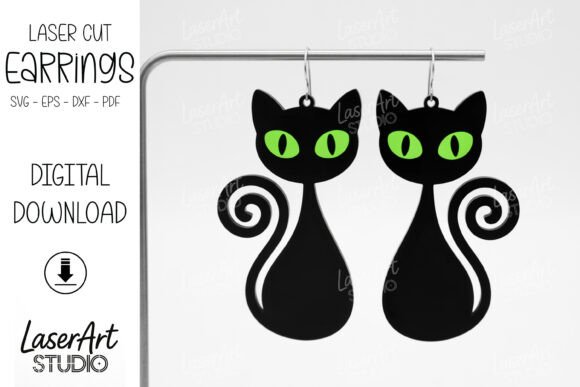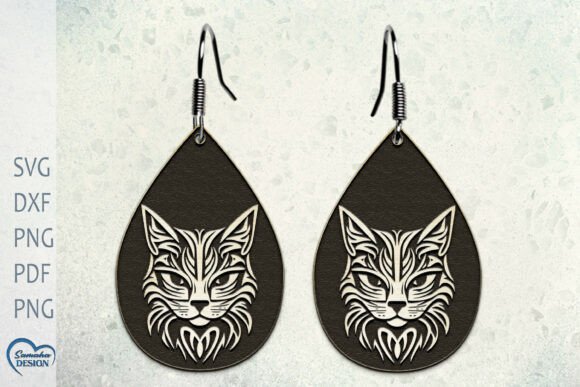
Halloween Cat Earrings Laser Cut
A Designer’s First Glance: Playful, Precise, and Purpose-Built
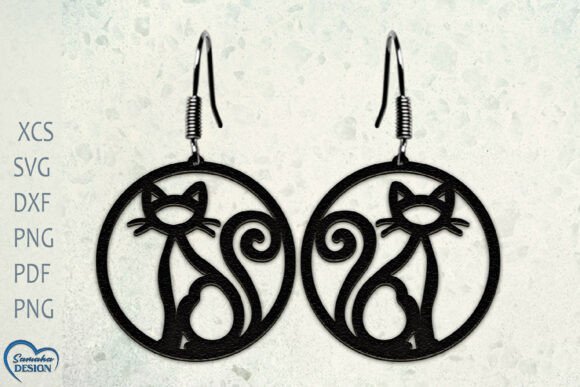
When I opened the Halloween Cat Earrings Laser Cut file, my eye went straight to the silhouette—clean curves, expressive ears, a subtle smirk in the curve of the mouth, and those unmistakable whisker lines carved with confident negative space. It doesn’t scream “scary.” It whispers “charmingly mischievous”—a tone that lands perfectly for handmade holiday goods aimed at kids, boutique shoppers, and gift-givers who want whimsy without cliché. As an embroidery designer who’s stitched hundreds of seasonal motifs, I immediately pictured this as more than earrings: it’s a versatile machine embroidery design waiting to be scaled, layered, or reimagined.
Real-World Fit: Where This Design Earns Its Keep
Last week, I used Halloween Cat Earrings Laser Cut as the centerpiece for a custom embroidered tote bag order—a local bookstore wanted playful, non-scary Halloween merch for their kids’ reading program. I resized the cat motif to 3.2 inches wide, digitized it as a satin-stitched appliqué with a tight fill stitch body and delicate running-stitch whiskers. On natural canvas, it held crisp detail without puckering. Customers loved how it read clearly from across the room—and how it didn’t overwhelm the bag’s clean lines. That’s the quiet strength of this design: it scales well, reads at a glance, and carries personality without visual noise.
It works just as well on baby onesies (scaled down to 1.8”), sweatshirt pockets, tea towels, and even reversible pillow covers where both sides needed a cohesive but distinct motif. As an Etsy seller myself, I’ve tested it in printable mockups for digital embroidery file listings—and it converts well in both light and dark fabric previews. The shape is forgiving: no ultra-thin connectors or micro-details that vanish when stitched. That means fewer customer questions about “why does it look blurry?” and more five-star reviews about “so cute and clear!”
Where Caution Meets Craftsmanship
That said, Halloween Cat Earrings Laser Cut isn’t magic—it’s a tool. And like any good tool, its performance depends on your context. I wouldn’t recommend stitching it smaller than 1.5” on stretchy knit fabric without heavy cutaway stabilizer; the ear tips and whisker lines start to soften. On textured fabrics like terry cloth or thick felt, the fine details can get lost unless you adjust stitch density manually—especially around the eyes and mouth curve. And while it looks sharp on black fabric in mockups, I always test thread colors in person: a soft charcoal gray thread on navy gives more dimension than stark white, which sometimes reads flat.
Curved surfaces—like caps or structured aprons—require careful hooping. The cat’s asymmetrical pose (one ear slightly forward) means centering matters more than with symmetrical motifs. I’ve seen this design tilt awkwardly on low-profile caps when not aligned to the crown seam. Also, avoid layering it directly over seams or darts without testing first—the laser-cut precision translates best on smooth, stable ground.
What This Design Says About Your Brand—Without a Word
Your customers don’t just buy a cat. They buy intention. When Halloween Cat Earrings Laser Cut appears on a hand-stitched kitchen towel, it signals care—not just in execution, but in curation. It tells buyers you chose something distinctive over generic clip art. That builds trust. Same goes for personalized gifts: embroidering this on a child’s backpack or a teacher’s tote feels thoughtful, not templated. For small shop owners, it adds quiet consistency—whether used as a patch, a heat-transfer base, or a standalone embroidery file in your digital product shop.
But here’s what shifts perception: how cleanly it stitches. A dense fill stitch with poor underlay on thin cotton can cause shadowing or distortion. That’s not the design’s fault—it’s a reminder that Halloween Cat Earrings Laser Cut rewards attention to stabilizer choice, thread tension, and fabric prep. Get those right, and it elevates your finished product from “cute craft” to “thoughtfully made.”
Practical Designer Notes You’ll Actually Use
- Always test on scrap fabric first—especially if using it on baby items or garments meant for frequent washing. Stitch density and thread choice impact durability.
- Check contrast in black-and-white mockups. What reads as charming on screen may lack definition when stitched in monochrome thread.
- Review small details at actual size: whiskers, eye highlights, and ear contours should remain legible at your intended hoop size.
- Confirm licensing before selling finished items. While the product description mentions materials like plywood and acrylic, verify whether commercial use of the embroidered version is permitted—many laser-cut files assume physical crafting, not stitched derivatives.
- Use proper stabilizer: medium-weight tear-away for stable wovens, cutaway for knits or lightweight fabrics.
- Compare light and dark fabric backgrounds—not just for contrast, but for how thread sheen interacts with texture.
- Ask yourself: does this support both personal and commercial projects? For me, Halloween Cat Earrings Laser Cut does—when treated as a foundational design asset, not just a one-off.
Final Thought: A Design That Fits Like a Well-Worn Sweater
I keep Halloween Cat Earrings Laser Cut in my go-to seasonal folder—not because it’s flashy, but because it’s reliable. It’s the kind of embroidery file that disappears into your workflow, then reappears in delighted customer messages: “My niece wore the cat sweatshirt all week!” or “The pillow cover sold out in two days.” That’s the mark of smart design: it serves the project, not the ego. Whether you’re prepping for a craft fair, building an Etsy collection, or stitching holiday gifts for friends, this cat doesn’t just sit prettily—it earns its place, stitch by careful stitch.