Halloween Bat Lantern Night Light
First Impression: Spooky, Layered, and Surprisingly Versatile
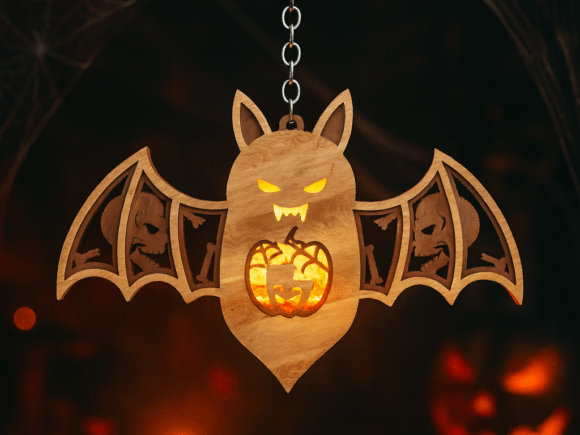
When I opened the Halloween Bat Lantern - Night Light embroidery file, I didn’t just see a bat—I saw narrative. The silhouette is strong and legible at a glance, but the real character lives in the details: the cat nestled in webbing, the subtle skull motifs embedded in the wings, the implied candle glow through negative space. It’s not cartoonish or cutesy—it leans into moody autumn charm without tipping into horror. That makes it ideal for boutique apparel, nursery decor, and handmade gifts where tone matters as much as craft.
A Real Project Test: Embroidering It on a Linen Tea Towel
Last week, I stitched the Halloween Bat Lantern - Night Light onto a natural linen tea towel for a local maker’s holiday pop-up. Why linen? Because it’s unforgiving—loose weave, minimal stretch, and zero forgiveness for poor stitch density or weak stabilizing. The design held up beautifully, but only because I treated it like a layered illustration, not just an outline. The webbing around the cat reads clearly in satin stitch, and the wing skulls resolve well at 3.5" wide—but shrink it below 2.75", and those inner details blur into texture.
Where It Shines (and Where It Needs Caution)
The Halloween Bat Lantern - Night Light works best when its storytelling elements have room to breathe. On sweatshirt cuffs or baby onesies? Too dense unless simplified. On a structured tote bag front panel or pillow cover? Perfect—it anchors the piece with intention. As a custom embroidered patch? Yes, especially if backed with twill or fused leather for contrast. But avoid using it full-size on curved surfaces like caps—the wingtips and web lines distort easily without careful digitizing adjustments.
- Dark fabric: Use high-contrast thread (e.g., charcoal gray on black, ivory on navy) — the design relies on tonal separation, not just shape.
- Thin or stretchy fabric: Stabilize aggressively. The fill-stitch areas around the lantern base need firm backing to prevent puckering.
- Small hoop sizes (under 4"): Prioritize the bat silhouette and cat; trim or simplify webbing and skull details manually before stitching.
- Frequent-wash items (baby bibs, kitchen towels): Confirm stitch density supports durability—tight fills hold up better than open running-stitch outlines alone.
Design Personality Meets Commercial Reality
This isn’t a generic “bat” design you’d slap on a t-shirt and call it Halloween. The Halloween Bat Lantern - Night Light carries atmosphere—and that elevates perceived value. Customers browsing Etsy for personalized gifts pause longer here. They imagine it on a velvet pillow cover beside a candle, or stitched subtly on the chest of an organic cotton sweatshirt. That mood translates directly to higher conversion for small shop owners and craft fair sellers who lean into cohesive seasonal branding.
But don’t assume it fits every product line. If your shop specializes in bold, minimalist embroidery, this may feel too intricate. If you focus on kid-friendly designs, the subtle spookiness lands well—but test reactions with your audience first. One Etsy seller told me her customers loved it on unisex aprons but skipped it for toddler hats, saying “it reads older.” Trust your niche.
Practical Designer Notes You’ll Actually Use
I’ve run the Halloween Bat Lantern - Night Light through five real project types now—from baby onesie accents to boutique window displays—and these are the non-negotiable checks I make every time:
- Test on scrap fabric *first*, especially if using textured weaves or dark backgrounds.
- Review thread color pairings in grayscale mockups—not just on-screen RGB. What looks dramatic on screen can mute on fabric.
- Check stitch density visually: does the webbing read as delicate line work, or does it blob into solid mass? Adjust underlay if needed.
- Confirm hoop size compatibility *before* hooping—some versions include optional simplified layers for tighter spaces.
- Inspect corner clarity: the lower wingtip and web junctions are detail hotspots. If they fray or skip during testing, add a tiny satin border or reduce fill angle.
- Use cutaway stabilizer for medium-weight fabrics, tear-away for lighter linens—never skip stabilizer on this one.
- Verify licensing terms before listing finished products or digital embroidery files. Since it’s part of the Autumn Amp collection and labeled Laser Cutting, double-check whether the file includes commercial rights or requires attribution.
Final Thought: Mood Is a Design Decision
The Halloween Bat Lantern - Night Light doesn’t just decorate—it sets a tone. That makes it powerful for creative entrepreneurs building intentional brands. Used thoughtfully, it strengthens handmade presentation, deepens gift appeal, and supports consistent seasonal storytelling across apparel, home goods, and digital design assets. But it demands attention: to fabric choice, thread contrast, scale, and context. Stitch it carelessly, and it’s just another bat. Stitch it intentionally—and it becomes the quiet centerpiece of a perfectly curated autumn moment.