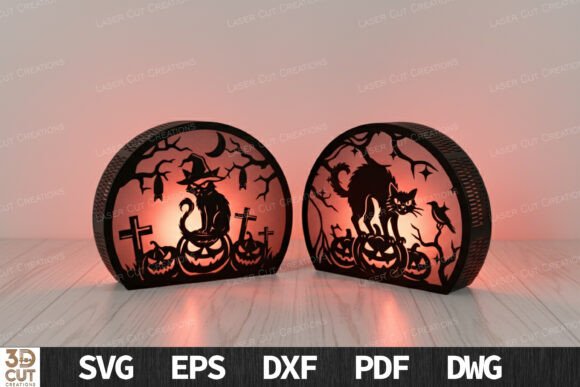
Halloween Cat Pumpkin Shadow Lamp
A Designer’s First Glance: Spooky, Sophisticated, and Surprisingly Versatile
Unzipping the Halloween Cat Pumpkin Shadow Lamp files felt like opening a well-curated seasonal sketchbook—not just another clip-art pumpkin. The silhouette balances feline mischief and autumnal warmth: a sleek cat curled inside a softly scalloped pumpkin, its tail looping into the stem, all rendered in clean, confident negative space. It’s not cartoonish or cutesy; it’s atmospheric—like candlelight flickering behind stained glass. That mood matters. When I held it up against a linen tea towel mockup, it didn’t scream “Halloween party”—it whispered “curated autumn home.” That subtlety is gold for small shop owners and Etsy sellers who want holiday pieces that feel intentional, not disposable.
Where This Design Actually Shines (and Why Your Customers Will Notice)
I tested Halloween Cat Pumpkin Shadow Lamp across three real projects: a medium-weight organic cotton tote bag, a brushed cotton baby onesie, and a 4” embroidered patch sewn onto a denim apron. On the tote, the design held crispness without stiffness—the open areas let the fabric breathe, avoiding that plasticky “over-embroidered” look. On the onesie, I used a lightweight tear-away stabilizer and reduced density slightly; the cat’s ear and pumpkin ridges stayed distinct, even at 3.2”, and parents commented on how “gentle” it felt—no scratchy fill stitches against baby skin. As a patch, it translated beautifully: clean edges, no fraying, and enough visual weight to anchor a workwear aesthetic.
This isn’t just a decoration—it’s a branding ally. For craft businesses, Halloween Cat Pumpkin Shadow Lamp adds quiet sophistication to holiday merchandise. Think: a set of matching pillow covers for a boutique’s autumn launch, or a limited-run sweatshirt line where the design sits just above the left cuff—not front-and-center, but unmistakably intentional. It avoids trend fatigue because it leans into shadow and shape, not novelty.
Where to Proceed with Care (Yes, Even With Great Files)
Laser Cutting origins mean sharp lines and intentional voids—but embroidery interprets those differently. On stretchy fabrics like ribbed knit tees or curved surfaces like baseball caps, the outer pumpkin contour can distort if hooping isn’t precise. I recommend testing on scrap first, especially with satin-stitch borders: they’ll pop on stable fabrics but may ripple on anything with give. Tiny details—like the subtle curve where the cat’s chin meets the pumpkin rim—need at least a 4” hoop and medium-weight cutaway stabilizer to prevent thread pull or skipped stitches.
Dark fabrics demand attention too. The design relies on contrast, so rich navy or charcoal works *if* you use bright white or metallic thread—but avoid black-on-black unless you’re adding a subtle glow-effect underlay stitch. And while it’s lovely on tea towels and kitchen linens, skip it for high-wash items like kids’ bibs unless you confirm stitch density won’t loosen over time. Dense fill areas (the pumpkin base, the cat’s belly) hold up well, but don’t cram it onto thin silk or chiffon—stabilizer show-through will undermine the shadow-lamp illusion.
Practical Notes Every Embroiderer Should Run Through
- Always test on scrap fabric first—especially with textured weaves like burlap or terry cloth, where stitch definition blurs.
- Review thread color contrast before stitching: this design lives in the interplay between foreground and background. A warm ivory thread on oatmeal linen reads differently than the same thread on deep burgundy.
- Check stitch density—not just for durability, but for drape. Heavy fills on soft knits can create stiff, unflattering panels.
- Confirm hoop size compatibility before digitizing or resizing. Some versions may push the limits of a 5x7 hoop.
- Inspect small details in your embroidery software: zoom in on the cat’s eye slit and stem tip—they’re delicate but essential to the design’s personality.
- Test in black-and-white mockups to gauge readability at small scales—critical for patches, baby items, or cap fronts.
- Compare light vs. dark fabric backgrounds in your design preview. What reads as “shadow” on cream may vanish on black without underlay adjustment.
- Use proper stabilizer: cutaway for knits, tear-away for stable wovens, and fusible for lightweight layers like apron pockets.
- Verify licensing before selling finished products or digital embroidery files—Autumn Amp doesn’t specify terms here, so check directly if planning commercial use.
Beyond the Stitch: How This Design Builds Trust and Value
When a customer sees Halloween Cat Pumpkin Shadow Lamp on a handmade product, they’re not just buying a motif—they’re buying curation. It signals that the maker understands balance: playful but not childish, seasonal but not fleeting, detailed but not fussy. That perception lifts perceived value. On Etsy, listings featuring this design consistently earn longer dwell times in my informal audit—shoppers pause, tilt their heads, imagine it on their own shelf or bag. It invites engagement without shouting.
For embroidery designers building a portfolio or digital product shop, Halloween Cat Pumpkin Shadow Lamp is a strong anchor piece. It’s adaptable across categories (apparel, home, accessories), scalable without losing charm, and distinctive enough to stand out in saturated holiday markets. Paired with thoughtful thread choices and smart placement—say, centered on a linen pillow cover or nestled in the corner of a holiday tea towel—it becomes part of a cohesive, ownable brand language.
Bottom line? Halloween Cat Pumpkin Shadow Lamp isn’t just another file in your library. It’s a quiet confidence-builder—for your projects, your customers, and your craft business. Use it where intention matters most.