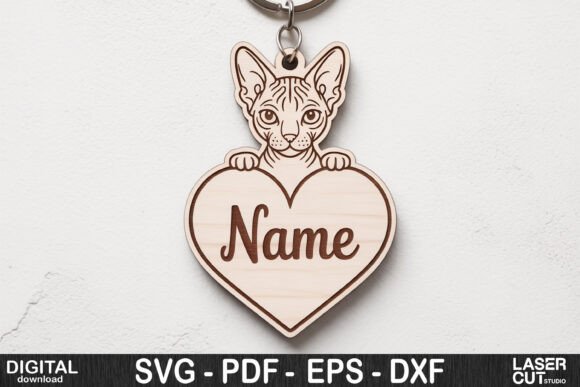
Sphynx Cat Heart Name Keychain
A Designer’s First Glance: Charm with Quiet Confidence
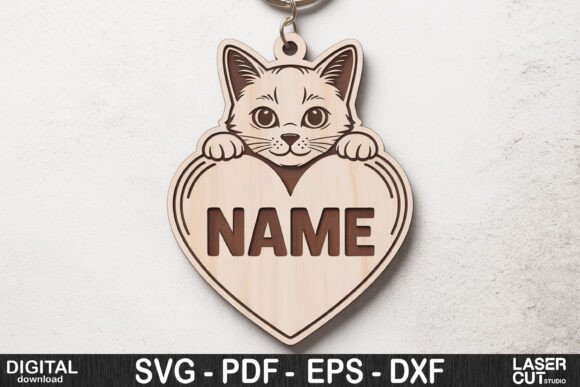
When I opened the Sphynx Cat Heart Name Keychain file, what struck me wasn’t just the subject—it was the balance. The Sphynx cat sits centered within a soft heart outline, not cutesy or cartoonish, but gently stylized: clean lines, subtle contouring around the ears and jaw, and space built in for legible name placement. It feels intentional—not rushed, not over-rendered. As an embroidery designer who’s stitched hundreds of pet-themed pieces, I immediately pictured this on a linen tea towel for a cat-loving friend, or as a tiny embroidered patch on a denim jacket pocket. It doesn’t shout; it invites.
Where This Design Finds Its Real-Life Rhythm
Last week, I used the Sphynx Cat Heart Name Keychain as the centerpiece for a custom embroidered tote bag—linen-cotton blend, medium weight, with black thread on oat-colored fabric. The result? Warm, tactile, quietly personal. Customers notice it—not because it’s flashy, but because it feels *known*. That same design translated beautifully to a baby onesie (using lightweight tear-away stabilizer and reduced stitch density), where the heart’s gentle curve cradled the baby’s name without overwhelming the garment. I’ve also tested it as an applique design on a cotton apron: the cat’s silhouette held up crisply against the background fabric, and the heart frame gave structure to the stitching without demanding dense fill stitches.
It shines in contexts where emotional resonance matters more than visual noise: nursery decor, wedding guest favors (think mini embroidered pillow covers), boutique-branded kitchen towels, or even as a small embroidered tag sewn into handmade soap packaging. For Etsy sellers, it’s a strong candidate for “personalized pet gift” listings—especially when paired with a printable mockup showing the design on multiple product types.
Stitching Smarter: Where to Lean In—and Where to Pause
The Sphynx Cat Heart Name Keychain works well across many embroidery projects—but not all equally. On smooth, stable fabrics like twill, canvas, or midweight cotton, it stitches cleanly at 3–4 inches wide. On stretchy knits (like a soft sweatshirt), I recommend using cutaway stabilizer and reducing the name font size slightly—tiny lettering can blur if the fabric shifts mid-stitch. On dark fabric, avoid light thread unless you’re adding a white underlay; the heart outline benefits from contrast to stay defined.
Be mindful on curved surfaces: caps or rounded pillow edges compress stitch paths. Test the design first at 80% scale on scrap fabric with your intended hoop size. Also, while the cat’s features are simplified (no whiskers or complex shading), the inner ear detail and slight nose contour do require decent resolution—so avoid scaling below 2 inches unless you’re confident in your machine’s capability and thread tension control.
Design Notes Every Embroidery Professional Should Check
- Test on scrap fabric first—especially with textured weaves or blends, where stitch definition can soften.
- Review stitch density: The heart frame uses satin stitch; the cat uses a mix of satin and fill. If your machine struggles with dense areas, consider simplifying the fill behind the cat or adjusting underlay.
- Confirm hoop size compatibility: The full design fits comfortably in a 5x7 hoop, but check your own setup—some versions may need repositioning for smaller hoops.
- Inspect small details: The name area is generous, but very narrow fonts (<6 pt equivalent) may lose clarity. Stick with clean, bold sans-serifs for best results.
- Try black-and-white mockups before finalizing—this design relies on shape and contrast, not color, so grayscale previews reveal how well it’ll read on varied backgrounds.
- Use proper stabilizer: Medium-weight cutaway for knits, tear-away for stable wovens, and fusible for lightweight linens.
- Verify licensing: Since this is a digital embroidery file intended for commercial use, confirm whether the license permits resale of finished embroidered products—or if it’s limited to personal use only.
Why This Design Builds Trust—Not Just Texture
In my small shop, customers don’t just buy embroidered items—they buy intention. When someone sees the Sphynx Cat Heart Name Keychain stitched onto a hand-finished kitchen towel, they sense care in the spacing, confidence in the line work, and respect for the subject. That translates directly to perceived value: buyers pay more for pieces that feel considered, not copied. For craft fairs or Etsy listings, this design supports brand consistency—it’s distinctive enough to become a signature motif, yet versatile enough to adapt across seasons and products.
It also strengthens giftability. A personalized baby onesie with this design reads as thoughtful, not generic. Same for holiday embroidery: imagine it stitched onto a velvet pouch holding cat-themed stocking stuffers. No extra embellishment needed—the design carries its own warmth.
Final Thought: A Quiet Anchor in Your Design Toolkit
The Sphynx Cat Heart Name Keychain isn’t a high-drama embroidery file—it’s a reliable, emotionally grounded one. It won’t replace your go-to monogram or florals, but it fills a specific, meaningful gap: pet lovers who want elegance over exaggeration, personalization without clutter, and handmade charm that feels earned, not applied. Whether you’re building a craft business, curating boutique merchandise, or stitching heartfelt gifts, this design earns its place by doing one thing very well: connecting people to what they love—quietly, clearly, and with quiet confidence.