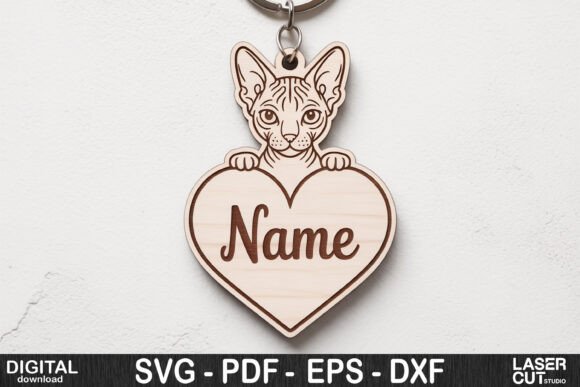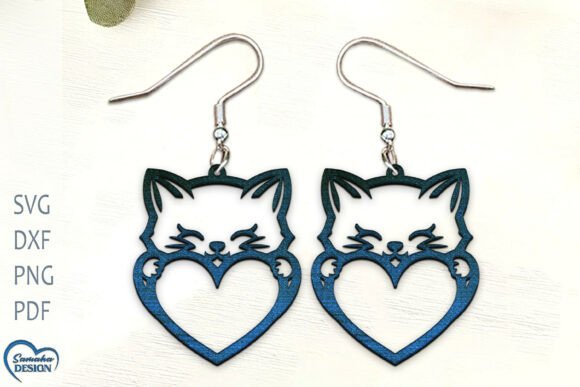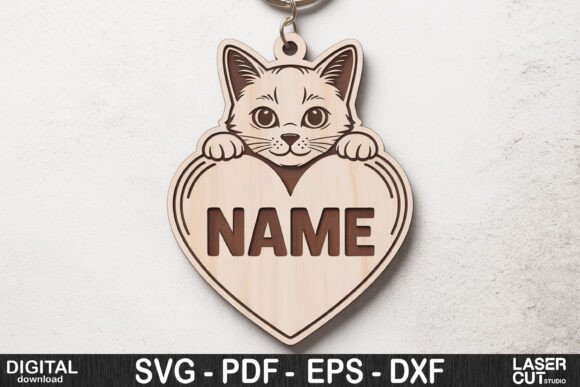
Siamese Cat Heart Name Keychain
A Designer’s First Glance: Charm with Quiet Confidence
When I opened the Siamese Cat Heart Name Keychain file, what struck me first wasn’t cuteness—it was balance. The silhouette blends a soft heart shape with a subtle Siamese profile: gentle ears, a delicate nose bridge, and just enough facial contour to read clearly at 1.5–2 inches tall. It doesn’t shout; it invites. That’s rare in pet-themed embroidery files, where busy details or exaggerated features often overwhelm small-scale stitching. This design feels intentional—not overdesigned, not underdeveloped—just right for a handmade product that needs to hold attention without demanding it.
Where It Lives Best: Real Projects, Not Just Pixels
Last week, I stitched a batch of these onto organic cotton tea towels for a local boutique’s spring launch. We used the Siamese Cat Heart Name Keychain as a focal point above the recipient’s name (in a clean, medium-weight sans serif). The result? Warm, personal, and quietly sophisticated—exactly what their customers expect from hand-embroidered kitchen goods. It also worked beautifully on lightweight linen aprons and baby onesies, where the heart’s rounded edges softened the formality of monogramming without sacrificing clarity.
I’ve seen this design shine most consistently in three contexts: personalized baby gifts (especially for Siamese-loving families), small-batch boutique merchandise (think curated gift sets or shelf-ready bundles), and Etsy listings where buyers search for “cat embroidery + name” or “heart-shaped pet monogram.” It’s not a bold statement piece for streetwear hoodies—but it’s perfect for a dainty embroidered patch on a denim jacket lapel or a minimalist tote bag front panel.
What Holds Up—and What Needs Careful Handling
The Siamese Cat Heart Name Keychain handles fabric texture well—its smooth outer curve and open interior avoid tight corners that snag on nubby weaves or fleece backs. That said, I’d avoid using it directly on heavy terry cloth or thick quilted blankets unless you’re willing to add extra stabilizer and reduce stitch density manually. On thin or stretchy fabrics like rayon challis or lightweight jersey, I recommend floating tear-away stabilizer *under* the hoop and testing tension first—those fine lines around the cat’s ear and heart outline can blur if the fabric shifts even slightly.
Dark fabrics require thoughtful thread choices. The design’s natural negative space works beautifully against black or navy, but only if your satin stitch is dense enough to prevent shadowing from the backing. For light fabrics, go with matte cotton threads rather than high-sheen polyester—the subtlety of the Siamese markings reads better with soft contrast. And yes, test that name font at actual size: some versions of the file include placeholder text that looks crisp at 100% zoom but loses legibility when stitched at 3/8" height on a curved surface like a cap visor.
Stitching Clarity Meets Customer Trust
Here’s what matters to my clients—and to yours: when someone orders a custom embroidered pillow cover with their cat’s name inside a heart, they’re buying emotional resonance, not just thread on fabric. The Siamese Cat Heart Name Keychain delivers that because it feels *handmade*, even when machine-stitched. Its proportions leave breathing room between elements, so fill stitches settle evenly and satin borders stay crisp. No pixelated edges. No overcrowded lettering. That translates directly into perceived value: customers photograph it, tag the maker, and return for matching items.
It also supports brand consistency effortlessly. Whether you’re embroidering for your own craft business or fulfilling wholesale orders for a pet boutique, this design scales cleanly across product types—from tiny iron-on patches to 4" hoop-ready sweatshirt fronts—without needing redesigns or layout adjustments.
Practical Notes Every Embroidery Designer Should Check
- Always test on scrap fabric first—especially if pairing with textured or dark materials.
- Review stitch density before running full batches. Dense fills work on stable cottons but may pucker on knits.
- Confirm hoop size compatibility. While the file itself is digital, your machine’s maximum hoop dimensions determine whether names fit comfortably inside the heart without distortion.
- Inspect small details at actual stitch size: eyelid curves, heart dimples, and name kerning all affect final readability.
- Test in black-and-white mockups to assess contrast before committing to thread colors.
- Compare light vs. dark fabric backgrounds—some satin stitch gradients look richer on ivory than on charcoal, and vice versa.
- Use appropriate stabilizer: cutaway for stretchy fabrics, tear-away for stable wovens, and fusible for lightweight linens.
- Verify licensing terms before selling finished products or bundling the Siamese Cat Heart Name Keychain into digital embroidery packs—even if the file is labeled “commercial use,” confirm whether resale of stitched items or redistribution of the digital file is permitted.
Final Thought: A Design That Serves the Maker First
This isn’t a flashy, trend-chasing embroidery file. It’s a reliable, adaptable, quietly expressive asset—one that helps crafters build trust, Etsy sellers refine their niche, and small shops create heirloom-quality pieces without overengineering. The Siamese Cat Heart Name Keychain earns its place in my working library because it solves real problems: how to personalize without cluttering, how to celebrate a pet without cliché, and how to make something feel handmade—even when every stitch is precise. If you’re choosing embroidery designs for client work, holiday collections, or your next craft fair table, this one belongs in the stack you reach for first.