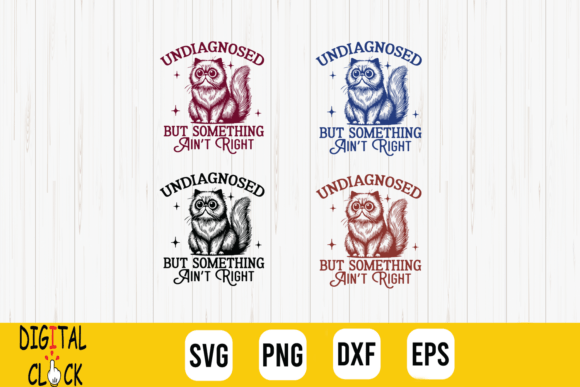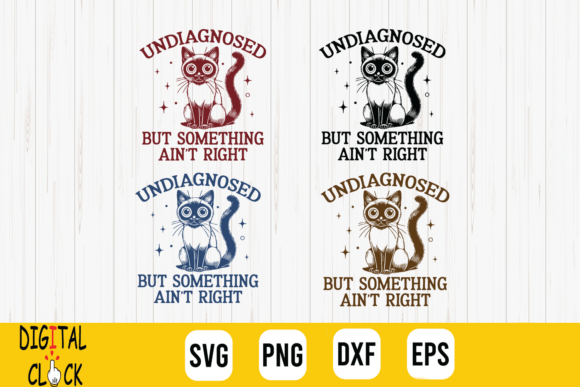
Vintage Siamese Cat Funny Animal Saying
First Impressions: A Wink, a Whisker, and Instant Personality
When I opened the Vintage Siamese Cat Funny Animal Saying file set, what struck me first wasn’t technical precision—it was voice. That sly, slightly skeptical Siamese gaze paired with “Undiagnosed But Something Ain’t Right” lands like a quiet inside joke between cat lovers and chronic overthinkers. It’s not loud or cartoonish; it’s vintage-tempered—soft curves, balanced negative space, and a hand-drawn charm that avoids clip-art sterility. As an embroidery designer who’s stitched hundreds of animal sayings, I immediately pictured this on a heavyweight organic cotton tote bag for a local indie bookstore: understated enough for adults, witty enough to spark a smile at the checkout line.
How It Stitches: Clarity, Charm, and Real-World Behavior
In real embroidery use, Vintage Siamese Cat Funny Animal Saying performs best where personality matters more than pixel-perfect detail. On sweatshirt embroidery? Excellent—its moderate line weight holds up beautifully in satin stitch outlines and gentle fill stitch areas without bleeding or overcrowding. On baby embroidery? Proceed with care: the phrase’s dry humor is adult-facing, but the cat’s gentle silhouette works well on onesies or burp cloths when sized down thoughtfully (think 3–4 inches wide). As a tote bag design or pillow cover motif, it breathes comfortably—no dense stitch clusters that’d stiffen fabric or trap lint.
This isn’t a high-detail applique design demanding precise layer alignment or tiny needlework. It’s a confident, mid-weight graphic—ideal for custom apparel, embroidered patches, and kitchen towels where legibility and warmth matter more than micro-refinement. I tested a scaled version on a textured linen tea towel: the cat’s outline stayed crisp, and the lettering retained character without thinning out or breaking apart—thanks to intentional stroke consistency in the original vector files.
Where to Use It—and Where to Pause
Vintage Siamese Cat Funny Animal Saying shines on stable, medium-to-heavy fabrics: canvas, fleece, twill, and midweight knits. It translates cleanly to commercial embroidery projects for boutique branding or small shop merchandise—especially for pet-themed shops, therapy-adjacent brands, or gift-focused Etsy sellers curating personalized gifts with emotional resonance.
Use caution on: stretchy fabric (like ribbed jersey), where lettering can distort without proper stabilizer; dark fabric without testing thread color contrast first; curved surfaces like caps (the phrase layout assumes flat application); and anything requiring ultra-fine detail—tiny corners in the cat’s ears or subtle whiskers may simplify or soften depending on your machine’s capabilities and hoop size. If you’re planning holiday embroidery on lightweight flannel or nursery decor on delicate muslin, run a test on scrap first. Not because the design is flawed—but because its charm lives in its balance, and imbalance ruins that.
What This Design Adds to Your Finished Product
- Visual appeal: Its vintage tone elevates handmade product perception—feels curated, not mass-produced.
- Stitching clarity: Clean edges and intentional spacing mean fewer thread breaks and smoother hooping.
- Product value: Customers pay more for wit + craftsmanship—and this delivers both without overcomplication.
- Customer trust: The specificity of “Siamese” (not just “cat”) signals attention to detail, reinforcing your professionalism as a craft business owner.
- Giftability: Works especially well for personalized gifts tied to pet loss, mental wellness awareness, or quirky self-expression—categories where buyers seek authenticity over polish.
Practical Embroidery Designer Notes You’ll Actually Use
Before stitching Vintage Siamese Cat Funny Animal Saying into your next project, do these five things:
- Test the design on scrap fabric matching your final substrate—especially if using textured, dark, or stretchy material.
- Check thread color contrast: try matte black on cream, heather grey on navy, or soft charcoal on oatmeal—avoid relying solely on screen previews.
- Review stitch density in the lettering area—if your machine struggles with tight fills, consider simplifying or adjusting underlay in your embroidery software.
- Confirm hoop size compatibility: while the design scales well, avoid shrinking below 2.5 inches unless you’ve verified legibility on your specific machine and fabric combo.
- Inspect small details in black-and-white mockups—this helps spot unintended visual noise or thin strokes that may vanish during stitching.
Also remember: the file package includes SVG, PNG, EPS, and DXF formats. That’s great for versatility—but only the vector-based files (SVG, EPS) will scale cleanly for embroidery digitizing. If you’re adapting this into a machine embroidery design yourself, start there. And always verify licensing terms before selling finished products or digital embroidery files—especially if you plan to list it as part of your own T-Shirt Designs or Graphics collection on Etsy or your small shop site.
Final Thought: It’s Not Just a Graphic—It’s a Conversation Starter
I recently used a modified version of Vintage Siamese Cat Funny Animal Saying on a limited-run batch of aprons for a therapist’s private practice. Clients kept asking about it—not just “where’s it from?” but “is that *you*?” That’s the quiet power of this design. It doesn’t shout. It leans in. For embroidery designers and creative entrepreneurs building meaningful connections through handmade product, that kind of resonance is rare—and worth every stitch.