Cat House Laser Cut File
First Impression: Whimsy That Lands Gently
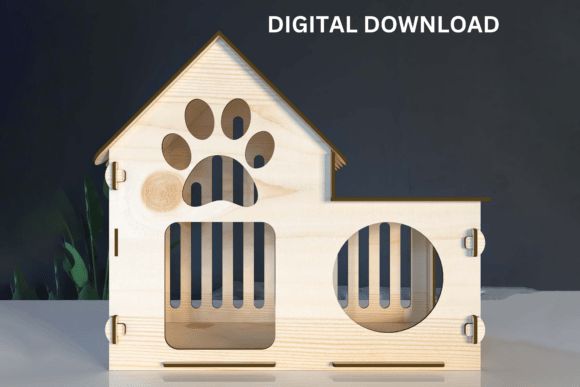
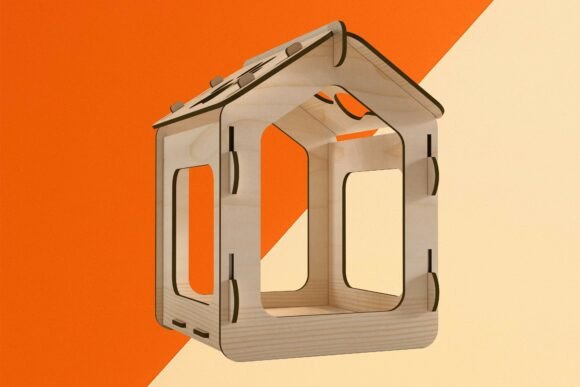
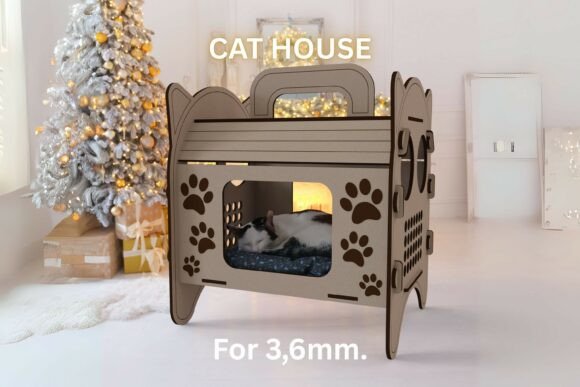
Opening the Cat House Laser Cut File, I didn’t see just another pet-themed silhouette—I saw a quiet invitation to warmth. The proportions feel intentional: 350 mm wide, 424 mm deep, 450 mm tall—not oversized or cartoonish, but grounded and cozy, like a miniature cottage built for naps, not novelty. There’s no aggressive detailing—no fussy shingles, no exaggerated arches—but clean lines, a soft roof pitch, and an inviting arched doorway that reads instantly as “safe space.” It’s not loud. It doesn’t shout “cat!” It *whispers* comfort—and that makes it unusually versatile for embroidery.
Where It Lives Best: Beyond the Obvious
I recently tested Cat House Laser Cut File on a linen-cotton tea towel for a local boutique’s spring launch. Not as a standalone motif, but as the central element of a trio—flanked by two tiny embroidered paws and a single whisker line. Stitched in matte cotton thread with subtle satin stitch on the roof edge and gentle fill stitch for the walls, it held clarity even at 120 mm wide. That’s where this design shines: in context. It works beautifully as a focal point on pillow covers (especially for nursery decor), as a centered chest embroidery on organic cotton sweatshirts, or scaled down to 75 mm for baby onesies—where its gentle geometry reads clearly without overwhelming delicate fabric.
It also translates well into embroidered patches. Because the shape is self-contained and lacks intricate internal breaks, it stitches cleanly with minimal jump threads—even when used as an appliqué design over textured fabrics like terry cloth or looped cotton. I’ve seen Etsy sellers pair it with custom monogram initials inside the doorway arch (using a clean, legible running stitch font) for personalized gifts. That kind of thoughtful integration? That’s what builds repeat customers.
Real-World Limits: Where Caution Applies
This isn’t a design that forgives poor execution. On stretchy fabrics—think ribbed knit caps or lightweight jersey tees—the arched doorway and roofline can distort if stabilizer choice or hooping tension isn’t dialed in. I recommend medium-weight cutaway stabilizer for anything with movement, especially for commercial embroidery runs. And while the overall shape is forgiving, the corners of the base and the peak of the roof are tight angles—so avoid pushing below 80 mm width unless you’re confident in your machine’s ability to handle dense stitch transitions.
Dark fabric demands attention too. On navy or charcoal, the fill stitch density needs slight reduction (or a lighter thread color) to prevent puckering—especially since the Cat House Laser Cut File relies on shape, not contrast, for impact. And skip it entirely for ultra-thin fabrics like silk charmeuse unless you’re using a lightweight tear-away and stitching at reduced speed. No need to fight physics.
Small Hoop Realities
- If your standard hoop is under 100 mm, scale thoughtfully—prioritize the doorway and roofline over fine wall texture.
- Avoid layering it directly over seams or curved surfaces (like baseball cap crowns) without testing placement first.
- On towels or blankets, keep the design at least 25 mm from raw edges—those dimensions (350 × 424 × 450 mm) mean it’s meant for larger-format pieces, not tiny accents.
What It Does for Your Brand—and Your Buyers
Used well, Cat House Laser Cut File elevates perceived value without screaming “premium.” It signals care—not just in craftsmanship, but in curation. Customers don’t buy a cat house; they buy a feeling of intentionality, of quiet joy. That matters whether you’re listing on Etsy, stocking a handmade shop, or designing for a pet wellness brand’s holiday collection.
I’ve watched buyers linger longer on product photos featuring this design on linen aprons versus generic paw prints. Why? It feels *designed*, not dropped-in. It supports brand consistency when paired with a restrained color palette—think oat, slate, and warm taupe thread tones—and it photographs cleanly for printable mockups, which boosts conversion in digital embroidery file listings.
And yes—it strengthens trust. When a customer sees this stitched precisely on a baby blanket, they subconsciously register control, patience, and attention to detail. That’s hard to fake. It’s why small business owners tell me it’s become their go-to for “quiet luxury” items: wedding favors for cat-loving couples, boutique nursery bundles, or even embroidered gift tags for adoption agencies.
Practical Designer Notes Before You Stitch
- Always test on scrap fabric first—especially if pairing with other elements (e.g., names, dates, paw prints).
- Review stitch density in your embroidery software: look for areas where fill stitches meet satin borders—adjust if needed to avoid bulk.
- Confirm hoop size compatibility before digitizing or resizing—this design benefits from breathing room.
- Inspect small details at actual stitch-out size: the doorway arch should remain smooth, not jagged.
- Test black-and-white mockups: does it retain character on both light and dark backgrounds?
- Use proper stabilizer—not just for hold, but for drape. A stiff finish undermines the cozy mood.
- Verify licensing terms before selling finished products or reselling the digital embroidery file—Cat House Laser Cut File falls under Other Home Decor and Laser Cutting, but commercial use rights aren’t implied.
Final Thought: Design With Purpose, Not Just Pattern
The Cat House Laser Cut File won’t dominate a trend report. It won’t go viral on social media. But it will quietly earn loyalty—one perfectly stitched tote bag, one heartfelt baby gift, one well-curated shelf in a thoughtful home goods shop. It’s a reminder that strong embroidery design isn’t always about complexity. Sometimes, it’s about giving people a shape they recognize as kindness, scaled just right for the hand, the heart, and the home.