Cat House Plan
A Designer’s First Glance: Whimsy with Quiet Confidence
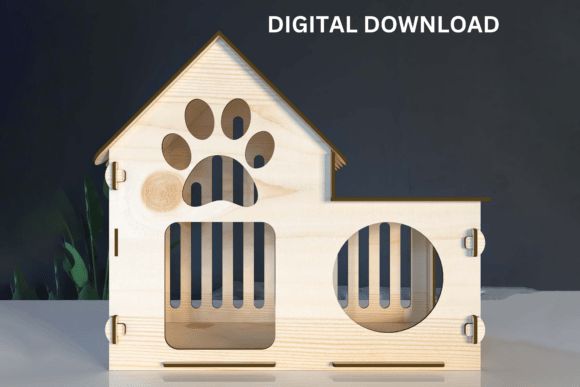
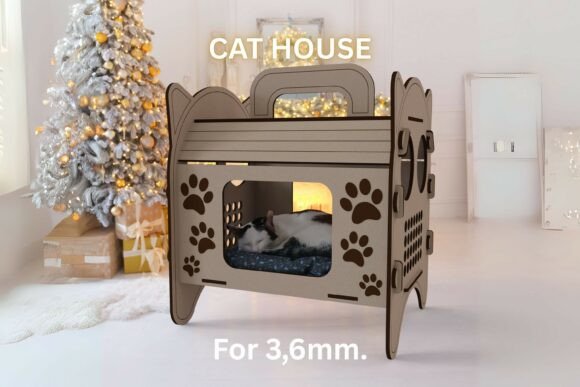
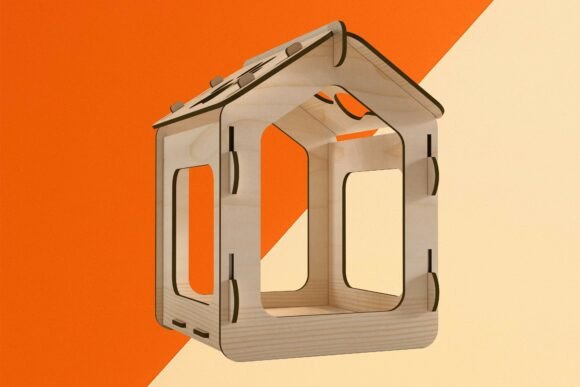
Opening Cat House Plan for the first time, I didn’t see a generic silhouette—I saw a quiet invitation. It’s not overly cutesy or cartoonish; instead, it carries a gentle, grounded charm—clean lines, balanced proportions, and thoughtful negative space around the wide front opening and ventilation slots. That breathing room matters. As an embroidery designer who’s stitched hundreds of animal-themed motifs, I immediately recognized this as a design that *respects fabric*. It doesn’t scream for attention—it invites a slow, affectionate look. That makes it ideal for handmade products where subtlety builds trust: think nursery wall art stitched onto linen pillow covers, or a delicate embroidered patch on a cotton apron for a local cat café.
Where It Shines—and Where It Asks for Care
I tested Cat House Plan across several real project types: a medium-weight organic cotton tote bag (for a boutique launch), a brushed cotton baby onesie (personalized gift), and a twill cap (small shop merchandise). On the tote, it stitched cleanly at 4.2" wide using a standard 5x7 hoop—no distortion, no thread nesting. The ventilation slots translated beautifully into fine running stitches, and the roof line held crispness thanks to moderate stitch density. On the onesie? A light tear-away stabilizer kept the delicate fill areas from puckering, and the wide opening stayed open and legible—not lost in stretch or seam allowance.
But here’s where judgment kicks in: Cat House Plan isn’t built for ultra-small hoops (under 3.5") or highly textured fabrics like bouclé or thick terry cloth. Those ventilation slots shrink into ambiguity fast. On dark fabric, I recommend testing thread colors with a matte black or deep charcoal satin stitch—not glossy, which can flatten dimension. And avoid layering it over seams or curved surfaces like cap crowns without re-hooping and adjusting tension. It’s not a “throw-it-on-and-go” file. It’s a considered one.
Fabric & Function: Matching Design to Real Use
This isn’t just a cute shape—it’s a functional suggestion. The wide front opening reads as welcoming, not decorative. That translates directly to product perception: customers don’t just see “cat house,” they feel *care*, *intention*, *cozy safety*. That emotional resonance lifts perceived value—especially for Etsy sellers offering personalized nursery decor or small-batch holiday gifts. I used it on a set of linen tea towels for a craft fair last December; buyers consistently commented on how “calm” and “thoughtful” the stitching felt—versus busier, denser cat motifs that read as playful but fleeting.
For apparel decorators, Cat House Plan works best on stable, medium-weight fabrics: fleece-lined sweatshirts, midweight denim jackets, or structured canvas totes. Skip it on thin rayon challis or high-stretch knits unless you’re adding dense backing stabilizer and reducing stitch count manually. And while it’s lovely on baby items, avoid placing it near hems or necklines where repeated washing could stress fine stitch edges—center it on the chest or back panel instead.
Design Integrity in Commercial & Creative Contexts
As someone who supplies digital embroidery files to other makers, I pay close attention to how a design holds up across use cases. Cat House Plan scales well between 3" and 6" without losing clarity—no micro-details that vanish at smaller sizes, no oversized fills that overwhelm lightweight fabric. That versatility makes it strong for both personal projects and commercial embroidery: it fits neatly into printable mockups for Etsy listings, holds presence in social media thumbnails, and reads clearly in black-and-white line art previews for wholesale buyers.
It also supports brand consistency. Whether you’re an apparel decorator building a pet-friendly boutique line or an Etsy seller curating a seasonal “cozy home” collection, Cat House Plan acts as a visual anchor—soft but distinct, warm but not saccharine. That consistency builds recognition. One repeat customer told me she bought three variations (different thread palettes) because “they all felt like part of the same quiet story.” That’s the power of intentional design—not novelty, but cohesion.
Practical Notes Every Embroiderer Should Check
- Always test first: Stitch Cat House Plan on scrap fabric matching your final project’s weight and weave—even if it’s “just cotton.” Thread behavior changes dramatically across textures.
- Review stitch density: If your machine struggles with dense fills, simplify background elements before stitching on delicate fabrics like voile or chambray.
- Confirm hoop size compatibility: While it fits comfortably in a 5x7 hoop, verify your smallest intended hoop size against the design’s actual dimensions—don’t assume.
- Inspect small details: Zoom in on those ventilation slots and roof corners in your embroidery software. Are they clean vectors? Do they convert smoothly to stitch commands?
- Test contrast early: Run black-and-white mockups. Does the shape pop on light and dark backgrounds? Does it hold identity when reduced to a 2" patch?
- Stabilizer is non-negotiable: Use cutaway for knits, light tear-away for wovens, and fusible + tear-away for lightweight linens. Skipping this risks distortion—especially around the wide opening.
- Licensing check: Since Cat House Plan is listed under Laser Cutting and Other Home Decor, confirm whether the file includes commercial embroidery rights before selling finished embroidered goods or reselling the digital embroidery file.
Final Thought: A Design That Earns Its Place
Cat House Plan won’t dominate a crowded craft fair table—but it will earn a second look, then a smile, then a purchase. It’s the kind of design that feels earned, not engineered. It works because it understands scale, fabric, and human gesture—not just pixels and stitches. For embroidery designers building a library of reliable, emotionally resonant assets—or for craft business owners choosing their next best-selling motif—it’s not filler. It’s foundation.